Sustainability is often discussed in terms of manufacturing, packaging, transportation, or energy consumption.
But there is another part of the retail ecosystem that deserves more attention: the physical store.
Every retail campaign, every printed poster, every promotional replacement, every shipment of marketing materials, and every piece of equipment eventually becomes part of the environmental footprint of a retail network.
For brands operating hundreds or thousands of locations, small decisions can quickly become large-scale impacts.
This is why sustainability in retail cannot only be about what happens behind the scenes.
It also has to be about how brands operate their physical stores.
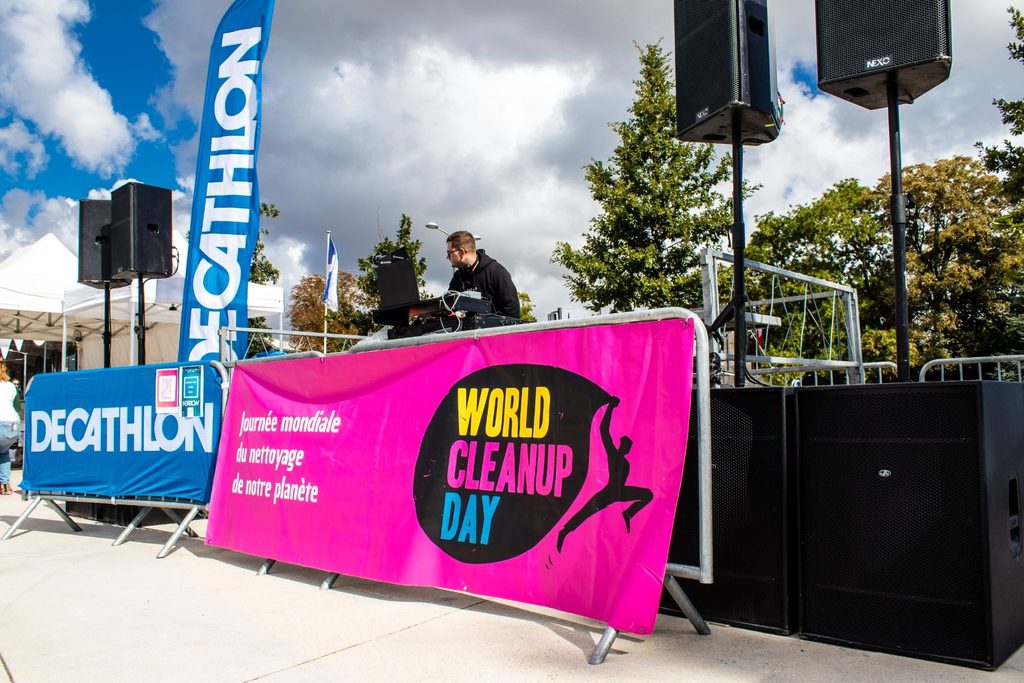
On September 20, 2026, the United Nations recognize World Cleanup Day, an international observance focused on waste reduction, responsible consumption, and sustainable development. The message is particularly relevant for businesses because sustainability is not only about large environmental initiatives—it is also about rethinking the everyday resources used across operations.
And retail is a perfect example.
Retail doesn’t only generate sales. It generates physical materials at an enormous scale.
Think about everything that can change inside a store over the course of a year: promotional posters, price tags, product labels, printed offers, campaign banners, point-of-sale materials, window graphics, flyers, tickets and receipts, shelf communication, and temporary promotional signage.
- A price changes, and a label may need to be replaced.
- A promotion ends, and an entire set of posters may need to be removed.
- A new smartphone launches, and old product communication becomes obsolete.
- A corporate campaign changes, and thousands of stores may need new materials.
For a retailer operating across hundreds or thousands of locations, these individual pieces can quickly become a much larger resource and waste challenge.
Even materials that are still physically usable can become obsolete simply because the information printed on them is no longer relevant.
The problem becomes even more significant when you consider everything around the material itself: the paper or other substrate, ink, printing, packaging, transportation, storage, installation, removal, and eventual disposal.
This is why sustainability in retail technology cannot simply mean using less energy or choosing more efficient hardware. It also means asking whether every physical communication asset needs to be produced in the first place.
Recent research into retail technology and sustainability identifies waste reduction and circular-economy practices as major areas where technology can support more sustainable retail operations. Some studies reviewed in the research report potential waste-reduction improvements of up to 25% through technology-enabled optimization, although the actual impact depends heavily on the technology and how it is implemented.
This creates an important question for modern retailers:
How can technology help brands reduce unnecessary physical waste while still delivering the same or an even better customer experience?
At SensorMedia, we believe technology should help brands create better retail experiences while also enabling more efficient ways of operating their physical networks.
Our digital retail solutions allow brands to manage content across stores without relying exclusively on printed materials for every campaign update.
With connected digital signage and screens, a campaign can be changed centrally instead of requiring a new physical print run every time information changes.
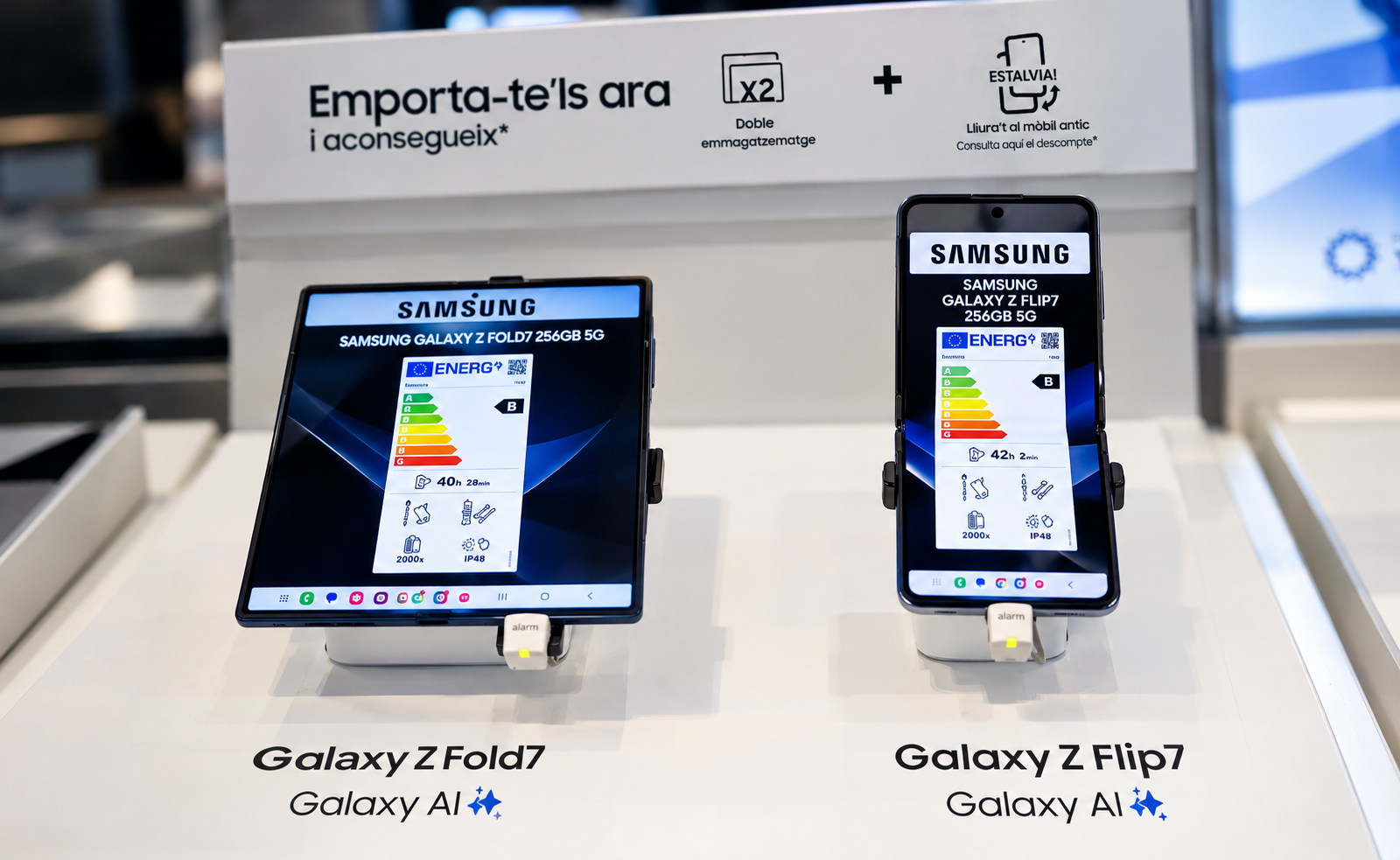
SmartCircle is supporting telco and electronics retailers across Europe by displaying the official Energy Label directly on device screens. This completely eliminates the need to print, distribute, and manually update physical energy rating labels whenever regulations or product details change.
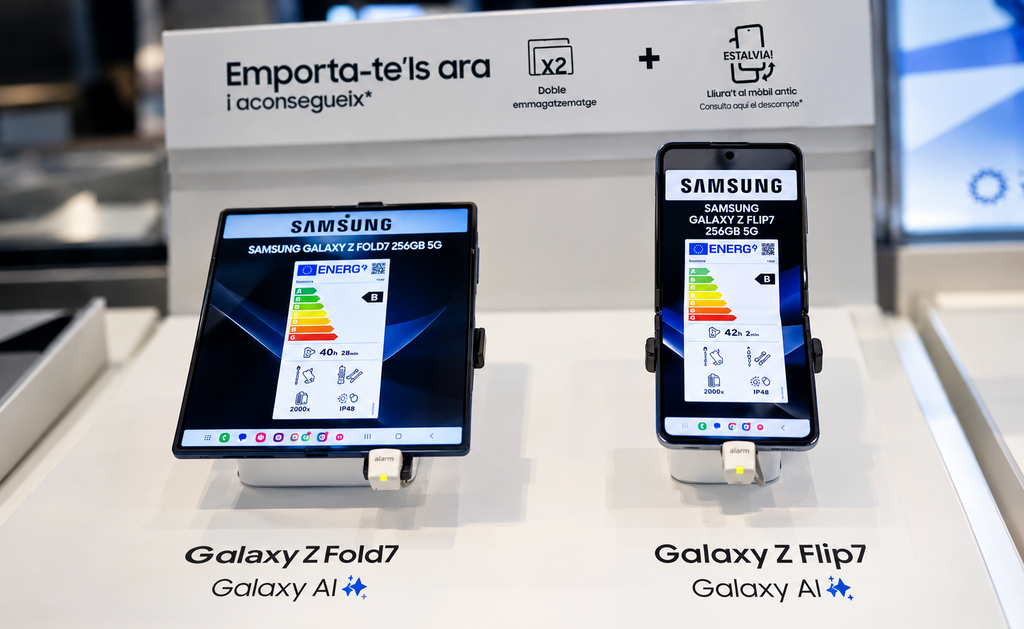
This can help brands reduce unnecessary reprints, limit the logistics associated with distributing replacement materials, and extend the flexibility of their retail communication.
The sustainability opportunity is therefore closely connected to operational efficiency.
When brands produce less unnecessary material, ship fewer replacements, and make better use of the assets already available in their stores, they can improve both efficiency and environmental responsibility.
Digital retail technology gives brands something that traditional printed communication cannot easily provide: adaptability.
Content can be updated without replacing the physical communication infrastructure.
Campaigns can be scheduled around specific dates.
Messages can change as promotions evolve.
Different content can be delivered to different locations.
And when a campaign ends, the content can be removed without sending teams into stores to physically dismantle every piece of printed communication.
For large retail networks, this flexibility can make a meaningful difference.
It allows brands to think beyond individual campaigns and start managing their retail environments as connected, evolving ecosystems.
Imagine a retailer launching ten major campaigns throughout the year.
With a traditional model, every campaign may require new printed materials, new packaging, transportation, installation, removal, and eventually disposal.
Now imagine that the same retail network has a connected digital infrastructure.
The screens remain in place while the content changes.
The physical asset doesn’t need to be replaced every time the message changes.
The infrastructure becomes reusable, while the content becomes adaptable.
This is one of the most important opportunities technology creates for sustainable retail: separating the physical asset from the campaign itself.
Instead of treating every campaign as a new physical production cycle, brands can create a retail environment designed to support many campaigns over time.
Sustainability should not be reduced to simply replacing posters with screens.
A genuinely responsible approach requires brands and technology providers to consider the entire lifecycle of their retail technology, from how hardware is selected and deployed to how long it remains useful and what happens when it reaches the end of its lifecycle.
It also means being thoughtful about energy consumption, content efficiency, maintenance, upgrades, and the longevity of retail infrastructure.
For technology companies serving the retail industry, sustainability should therefore become part of the conversation from the beginning.
The question isn’t only:
“Can technology make this store smarter?”
It should also be:
“Can we make this store smarter while using resources more responsibly?”
That is where sustainable retail technology can create its greatest impact.
For brands, sustainability and business performance do not have to be opposing priorities.
Reducing unnecessary printing can also reduce production and replacement costs.
Reducing physical distribution can simplify operations.
Reusable digital infrastructure can provide greater flexibility across campaigns.
And centralized content management can help brands make better use of the retail assets they already have.
The result is a retail model where technology doesn’t simply create a more modern customer experience.
It can also help brands operate their physical networks more intelligently and responsibly.
The future of retail will not be defined only by how connected stores become.
It will also be defined by how responsibly those stores operate.
At Sensor Media, we believe technology has an important role to play in that evolution.
By helping brands move from static, resource-intensive retail communication toward connected and adaptable digital experiences, we can help create retail environments that are not only more engaging, but also more efficient and thoughtful about the resources they use.
Because making retail smarter should also mean making it more responsible.
Let’s rethink what sustainable retail can look like.